Tag: Aristotle
-
What is a Learner?: Reading Charlotte Mason through Aristotle’s Four Causes
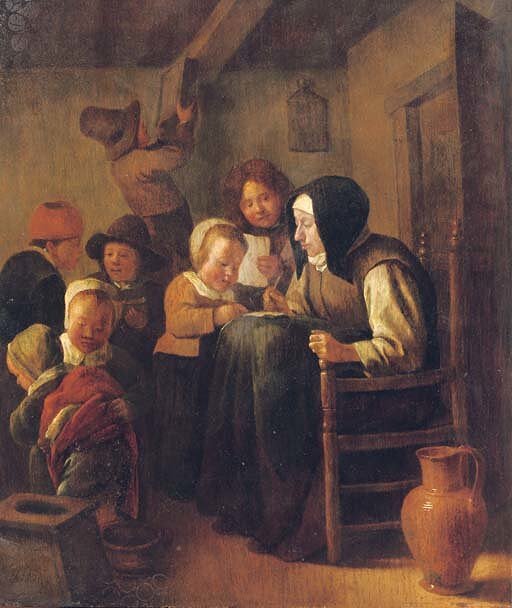
The goals and aims of our educational renewal movement center not on the quality of our curriculum or the quality of our teacher. Instead, the quality of learning is the true test of whether we are providing something of lasting value and worth. To that end, I have taken a look at the learner and…
-

Apprenticeship in the Arts, Part 5: Structuring the Academy for Christian Artistry
In the previous article we explored the need to counter the passion mindset of our current career counseling by replacing it with a craftsman mindset drawn from a proper understanding of apprenticeship in the arts. Apprenticing students in various forms of artistry (including the liberal arts) constitutes the role of the Academy that is most…
-

Apprenticeship in the Arts, Part 4: Artistry, the Academy and the Working World
In his book So Good They Can’t Ignore You: Why Skills Trump Passion in the Quest for Work You Love, Cal Newport argues against the well-known Passion Hypothesis of career happiness. He describes the Passion Hypothesis as the idea that “the key to occupational happiness is to first figure out what you’re passionate about and…
-

Apprenticeship in the Arts, Part 3: Crafting Lessons in Artistry
In the previous two articles in this series exploring Aristotle’s intellectual virtues, I laid out a fivefold division of the arts and a teaching method for training in artistry. My guiding hypothesis is that rethinking education through the Aristotelian paradigm of intellectual virtues will combat some of the typical problems of modern education. Bloom’s Taxonomy…
-

Apprenticeship in the Arts, Part 2: A Pedagogy of Craft
In my previous article in this series on Aristotle’s intellectual virtues, I discussed the general nature of artistry or craftsmanship under the heading of apprenticeship. Aristotle’s virtue of techne, often translated ‘art’, points to our human capacity to make things, to produce things in the world. Words like ‘artistry’ or ‘craftsmanship’ help to convey in…
-

The Educational Renaissance Symposium 2021: A Digest
On Wednesday, August 4th we had our first annual Educational Renaissance Symposium hosted by Coram Deo Academy in Carmel, Indiana. It was exciting to welcome over sixty participants who heard keynote addresses from Educational Renaissance authors as well as attended great workshops by a variety of guests. The Symposium is a different kind of convention,…
-

The Value of Objective Value: C. S. Lewis on Renewing Education
No matter what age you or your children are, I highly recommend The Chronicles of Narnia by C. S. Lewis for summer reading. They are lighthearted yet full of depth. I am reading aloud The Silver Chair, the fourth book in the seven-book series. For those who know the general contours of the series, this…
-

Apprenticeship in the Arts, Part 1: Traditions and Divisions
The previous two articles have paved the way both for our discussion of Aristotle’s intellectual virtue of techne, artistry or craftsmanship, as well as the intellectual virtue of phronesis, practical wisdom or prudence. In a strict sense, the analogy between artistry and morality is aside from our central argument, which consists in working out the…
-

Practicing in the Dark or the Day: Well-worn Paths or Bushwalking, Artistry and Moral Virtue Continued
In my last article we explored the analogy between Aristotle’s intellectual virtue of artistry or craftsmanship (Greek: techne) and moral virtue, taking our cue from the Nicomachean Ethics book II. Along the way we discovered the foundation for these two types of excellence in habit development or the neural networks of the brain. Excellence, according…
-

Moral Virtue and the Intellectual Virtue of Artistry or Craftsmanship
It might seem strange after the paradigm delineated above to focus our attention back on intellectual virtues alone, just after arguing for the holistic Christian purpose of education: the cultivation of moral, intellectual and spiritual virtues. But it is impossible to do everything in a single series or book. The cultivation of moral virtues requires…