Author: Kolby Atchison
-

The Drive to Learn: Three Views on the Desire for Knowledge
What is the purpose of knowledge? What is its draw? What drives us to learn and pursue knowledge about God, the world, and ourselves? Most educators agree that pursuing knowledge is a primary goal of education. But views diverge soon after, specifically when questions about the purpose of knowledge emerge as well as what fields…
-

The Classical Notion of Self-Education for Today
In her lecture at Oxford in 1947, Dorothy Sayers remarked, “Is it not the great defect of our education today, a defect traceable through all the disquieting symptoms of trouble that I have mentioned, that although we often succeed in teaching our pupils ‘subjects,’ we fail lamentably on the whole in teaching them how to…
-

Teaching a Narration-Based Bible Lesson
“Child,” said Aslan, in a gentler voice than he had yet used, “perhaps you do not see quite as well as you think. But the first step is to remember. Repeat to me, in order, the four signs.” The Silver Chair by C.S. Lewis Teaching a Bible lesson can be a teacher’s most intimidating class…
-

Refining the Mission for an Aligned Community
In organizational development, scholars often make the distinction between an organization’s vision and mission. While there are numerous ways to differentiate between the two, generally speaking, an organization’s vision is an inspirational picture of the future. It is the aspirational end state that comes from asking the question, “What if the world could be different?…
-
Virtue Formation and Rightly Ordered Loves
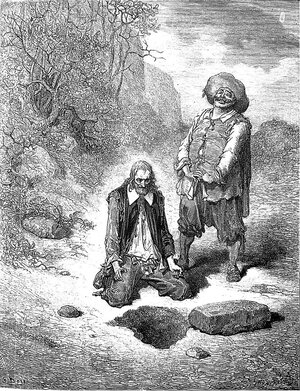
The cultivation of virtue is unarguably a core objective in the classical vision for education. In contrast to knowledge acquisition or skills mastery, growing virtue in our students is about strengthening their internal moral structure. It is fundamentally a project of formation, changing a person for the good in pursuit of it. Interestingly, Augustine of…
-

Love the Lord Your God With All Your Mind
And behold, a lawyer stood up to put him to the test, saying, “Teacher, what shall I do to inherit eternal life?” He said to him, “What is written in the Law? How do you read it?” And he answered, “You shall love the Lord your God with all your heart and with all your…
-

3 Leadership Books for Teachers
Teachers are the leaders of their classrooms. Now, this may seem obvious (who else would be in charge?), so let me explain. Teachers are responsible for the execution of classroom objectives and the development of their students. In a healthy school, they are given the freedom and responsibility, within a broader structure of administrative oversight,…
-

The Life of the Mind, Part 1: From Proverbs to Einstein
It seems to me that we have lost sight of the significance of the human mind. Here I mean more than one’s brain, but not less than it. Humans cannot be reduced to physical neurology, but neither can they be understood apart from it. We are mind-body unities, created as embodied souls, or ensouled bodies,…
-

“Education is a Life”: Igniting a Love for Learning in the Classroom
“’Education is an atmosphere, a discipline, a life’––is perhaps the most complete and adequate definition of education we possess. It is a great thing to have said it; and our wiser posterity may see in that ‘profound and exquisite remark’ the fruition of a lifetime of critical effort (Charlotte Mason, Parents and Children, p. 33).…
-
“Education is a Discipline”: Virtue Formation in the Classroom
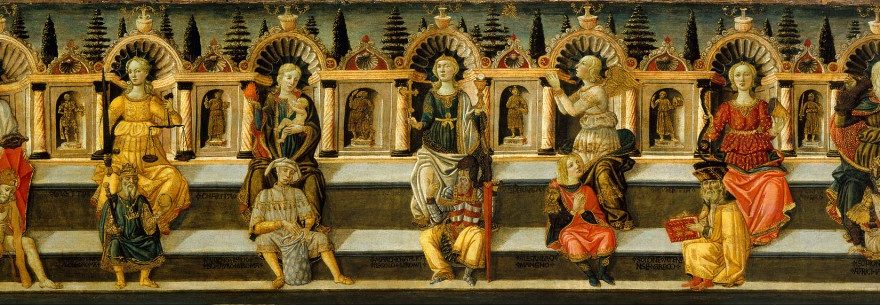
“’Education is an atmosphere, a discipline, a life’––is perhaps the most complete and adequate definition of education we possess. It is a great thing to have said it; and our wiser posterity may see in that ‘profound and exquisite remark’ the fruition of a lifetime of critical effort (Charlotte Mason, Parents and Children, p. 33).…