Author: Jason Barney
-

New Year’s Resolutions, Goal Setting and Education
The idea of New Year’s resolutions elicits strong reactions from some people. “If you want to change, why wait until the New Year to start?” the cynical say. Others perhaps remember the failure of last year with some measure of shame and regret. Still others are fired up about the success and dream-fulfillment that lie…
-
Counsels of the Wise, Part 8: Aiming at the Intermediate or Aristotle’s Moral Virtues
We’ve traveled far in this series on restoring the forgotten goal of prudence or practical wisdom to our educational goals. We established the necessity of prudence alongside moral virtue as constituting the intellectual virtue that accompanies and regulates all the moral virtues by deliberating about what is good or bad for human beings. A Christian…
-
Counsels of the Wise, Part 7: Leadership, Liberal Arts, and Prudence
In the previous article we finally laid out a pedagogy for training students in prudence. While there are many preliminary actions that we can take to sow the seeds of prudence and provide for students’ good instruction from sources of moral wisdom, it is nevertheless true that the full acquisition of practical wisdom awaits a…
-

The Education of the Count of Monte Cristo
What are the proper sources for an educational philosophy? Should educators read only sociological journals and experiment in their classroom for the best results? Or is there something more humane and artistic in the nature of teaching? We have decried the technicism and scientism characteristic of modern education before. One consequence of these trends is…
-
The Counsels of the Wise, Part 6: A Pedagogy of Prudence
At this point in our series, we have established prudence or practical wisdom as a Christian and classical goal of education. We have also laid out several paths toward prudence, seeds really, which must be sown in early youth in order to reap the full flowering of practical wisdom in students’ more mature years. Among…
-
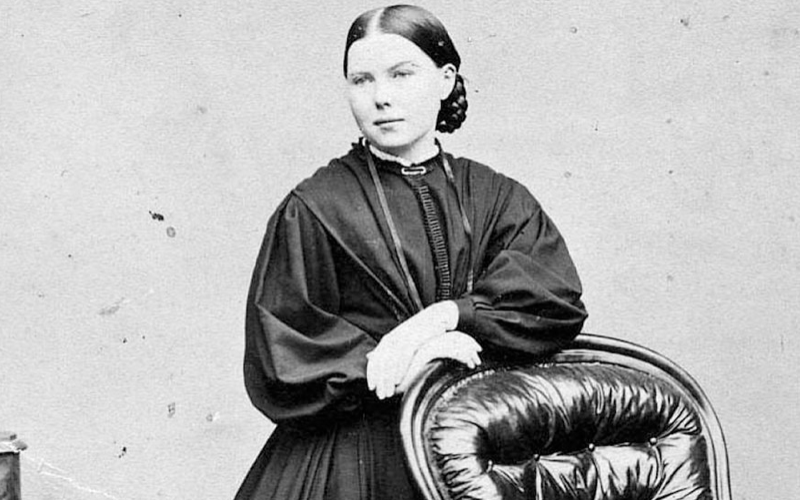
Charlotte Mason, the Educational Philosopher
In researching Charlotte Mason’s life for my book on her with Classical Academic Press (published 2023: Charlotte Mason: A Liberal Education for all!), the latest in the Giants in the History of Education series (see my recorded webinar with Classical Academic Press!) I was struck by Mason’s insistence on the importance of educational philosophy. This stands in contrast to many…
-
Why Classical Education Needs a Theology of Wisdom: A Foundation for Wise Integration in the Modern World
The modern world of education is characterized by the opposites of integration: isolation and reductionism. Colin Gunton, in the 1992 Bampton Lectures at Cambridge, entitled The One, The Three and the Many: God, Creation and the Culture of Modernity, uses the terms, “disengagement” and “fragmentation” to describe the predicament of modernity. The term “disengagement” he…
-

Counsels of the Wise, Part 5: Principles and Practice, Examples and Discipline
In the last article we discussed “good instruction” as a preliminary or a forerunner to prudence. While the development of prudence itself must be confirmed through experience, since it requires familiarity with all the particulars of life, it can and must be fostered in the young through implanting the right principles. A great part of…
-

Counsels of the Wise, Part 4: Preliminary Instruction in Prudence
How does a person become wise? What are the proper ingredients in an educational paradigm aimed at prudence? Where would we even begin? So much of K-12 education seems to have nothing to do with practical wisdom, as Aristotle defines it. How do we recover the classical goals of wisdom and virtue in earnest, and…
-

Counsels of the Wise, Part 3: The Practical Nature of Prudence
In this series we are recovering several lost goals of education by exploring Aristotle’s intellectual virtues as replacement learning objectives for Bloom’s taxonomy. Prudence or practical wisdom (phronesis) is one such lost goal, which is endorsed by the biblical book of Proverbs and the New Testament, even if Aristotle’s exact terminology is not adhered to.…