
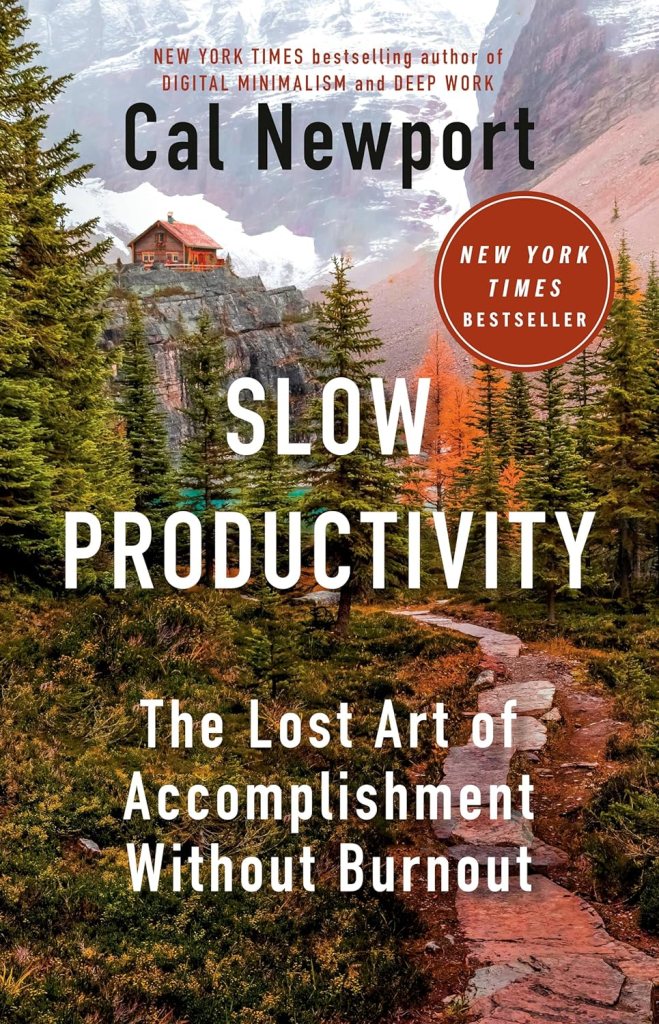
In this series on Slow Productivity in School, we’ve been exploring the paradox of festina lente (“hasten slowly”). When it comes to the work of learning, sometimes you must go slow to go fast. Or, perhaps more accurately, you must slow down to be truly productive. Taking our cues from Cal Newport’s Slow Productivity: The Lost Art of Accomplishment without Burnout, we are applying his three principles for slow productivity to our teaching practices in classical Christian schools (1. Do Fewer Things, 2. Work at a Natural Pace, 3. Obsess Over Quality).
After first diagnosing the problem of pseudo-productivity in modern schools, analogous to the hustle culture of modern work environments, we then explored the well-known Latin phrase multum non multa (“much not many things”) under the principle of doing fewer things. The key takeaway is that rather than cutting down on “subjects” to the bare essentials, this principle really applies best to the number and quality of “assignments.” Students in our classical Christian schools can read and study widely without suffering through busywork. Second, we explored the need to work at a natural pace as an explanation of how we can recover school as scholé or leisure. The point is that there are rhythms to ideal learning and racing through worksheets and covering pages of textbooks like the wind isn’t necessarily the best for deep understanding and long term retention.
In this final article, we’re focusing on the principle that we might call the main goal of it all: “Obsess over quality.” In a way, doing fewer things and working at a natural pace are pointless if they don’t lead to an increased focus on quality. At the beginning we set out the idea that what really lurks behind the phrase multum non multa is a prioritization of depth over breadth and quality over quantity. Slowness is not an end in itself but is meant to serve the real or genuine productivity. Newport describes this final principle of obsessing over quality this way:
“Obsess over the quality of what you produce, even if this means missing opportunities in the short term. Leverage the value of these results to gain more and more freedom in your efforts over the long term” (173).
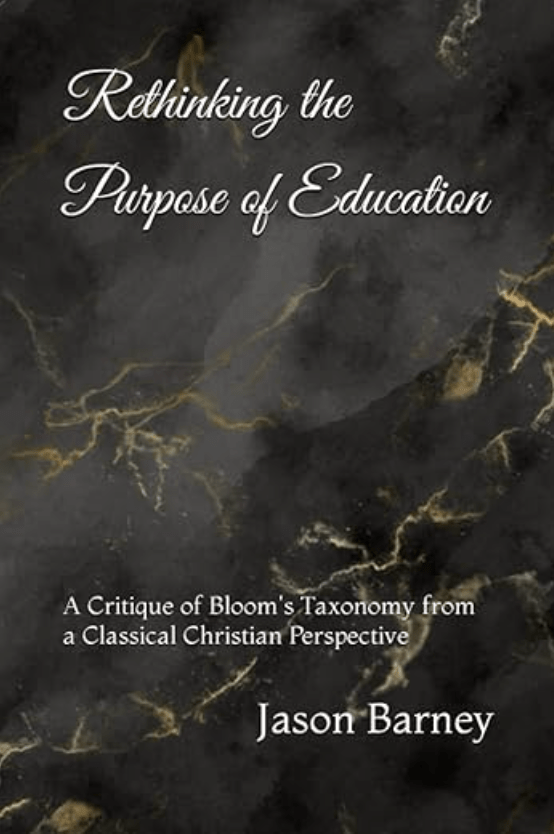
For those of us who work in classical Christian schools, as I have argued elsewhere (see Rethinking the Purpose of Education), the true purpose of our educational efforts should be the cultivation of moral, spiritual, and intellectual virtues in our students. If that is the case, then haste can be the enemy of progress. Instead, as master craftsmen, we teachers and educators need to take the necessary time to cultivate mastery in our students. Slipshod, shoddy work, rushed through quickly, without attention to the details and to a host of minor improvements necessary for quality do not “move the needle.”
There is a real mental shift that must occur here for many of us. We have had the rat-race of school so ingrained in our psyche, that we feel like we are wasting time if we’re not completing a worksheet or a powerpoint buzzer quiz every 20 min. Our media-saturated world too has reduced our attention span and given us ADD for the type of focused effort that actually forges increased quality.
Another culprit to our busyness of attitude is the knowledge-transfer vision of education, as opposed to the traditional liberal arts approach. We tend to envision the main part of education as a process of information download, rather than students developing mastery in handling certain well-worn tools. When we view K-12 education instead through the lens of helping students hone their artistry in the liberal arts, then we will focus more on the students producing high quality interpretations, arguments, and persuasive compositions.
Students would then develop an artist’s eye for quality and mastery in the creative productions of the liberal arts, including of course in math and science. This focus then multiplies labor by making their own independent reading and thinking that much more effective. They are then able to hasten along the path of lifelong learning with ease, because the way has been smoothed for them by mastering the fundamental skills.
What does this all mean practically for teachers working with students in the classroom? In her book Home Education, Charlotte Mason proposed the habit of perfect execution as a major guiding vision for training young children. She explained,
‘Throw perfection into all you do’ is a counsel upon which a family may be brought up with great advantage. We English, as a nation, think too much of persons, and too little of things, work, execution. Our children are allowed to make their figures or their letters, their stitches, their dolls’ clothes, their small carpentry, anyhow, with the notion that they will do better by-and-by. Other nations–the Germans and the French, for instance–look at the question philosophically, and know that if children get the habit of turning out imperfect work, the men and women will undoubtedly keep that habit up. I remember being delighted with the work of a class of about forty children, of six and seven, in an elementary school at Heidelberg. They were doing a writing lesson, accompanied by a good deal of oral teaching from a master, who wrote each word on the blackboard. By-and-by the slates were shown, and I did not observe one faulty or irregular letter on the whole forty slates. (110-111)

If what Mason says was true of Victorian England, how much more would she note “the Habit of turning out Imperfect Work” in 21st century America. Her example demonstrates that this feature is to a large extent cultural, and may have to do with our Rousseauian focus on children’s “personality” and “developmental readiness.” Our teachers may make excuses for failing to hold out the standard for careful execution of work based on how large the class is (“I simply can’t get around to all sixteen students!”), but this German class of forty puts us to shame.
To be fair, Mason does have a category for setting the bar too high for students. It is possible to obsess over the wrong details or expect a type of detailed quality that is not yet attainable by a young novice. Mason explains,
No work should be given to a child that he cannot execute perfectly, and then perfection should be required from him as a matter of course. For instance, he is set to do a copy of strokes, and is allowed to show a slateful at all sorts of slopes and all sorts of intervals; his moral sense is vitiated, his eye is injured. Set him six strokes to copy; let him, not bring a slateful, but six perfect strokes, at regular distances and at regular slopes. If he produces a faulty pair, get him to point out the fault, and persevere until he has produced his task; if he does not do it to-day, let him go on to-morrow and the next day, and when the six perfect strokes appear, let it be an occasion of triumph. So with the little tasks of painting, drawing or construction he sets himself–let everything he does be well done. An unsteady house of cards is a thing to be ashamed of. (111)
It can be seen from this that Mason endorses explicitly the principles of doing fewer things at a natural pace, in order to enable an obsession over quality. Clearly she wants students to internalize the mindset of mastery from an early age.

It’s important to clarify that this is not the sort of perfectionism that expects to never make mistakes in the first place. She is endorsing rather the type of growth mindset that believes that every child can produce high quality and accurate work, if they are given the time and held accountable for doing so. This mindset actually functions to empower the student and enable progress. Filling a slate with incorrect strokes does not improve a student’s handwriting, but tends to solidify bad habits. As my gymnastics coach drill in to us when we were young, “Practice does not make perfect. Practice makes permanent. Perfect practice makes perfect.”
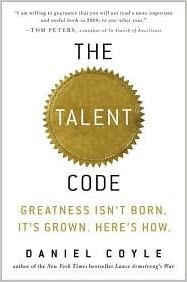
This paradoxical focus on perfection by actively attending to and correcting mistakes is characteristic of what Daniel Coyle calls deep practice. As he explains, “struggling in certain targeted ways–operating at the edges of your ability, where you make mistakes–makes you smarter. Or to put it a slightly different way, experiences where you’re forced to slow down, make errors, and correct them–as you would if you were walking up an ice-covered hill, slipping and stumbling as you go–end up making you swift and graceful without you realizing it” (The Talent Code, 18). This provides a helpful counter to a misunderstanding of Mason’s insistence that “no work should be given to a child that he cannot execute perfectly,” which might lead us to ease the way too much and avoid appropriate challenges. We have to read in to her version of “cannot” a much stronger belief in the capability of children than we tend to have.
The practical applications of this habit of perfect execution and obsession over quality are endless and as varied as the nature of the many subjects and arts that we teach. So, instead it might be more helpful to open out our gaze again to all three principles, and provide a series of practical applications to the classroom that fuse a holistic vision for slow productivity in school through 1) doing fewer things, 2) working at a natural pace, and 3) obsessing over quality.

Practical Applications of Slow Productivity in School
First, emphasize deep engagement with material over superficial coverage. This will involve a reduced workload, time for contemplation, and the ability to marinate in the knowledge and skills they are gaining.
- Reduced Workload: Instead of assigning a vast quantity of assignments to complete, or having students race through reading the textbook at home, teachers should prioritize fewer, more substantial readings, projects, and discussions. This reduced workload will allow students to delve more deeply into the material rather than skimming or memorizing for tests.
- Time for Contemplation and Reflection: Working at a natural pace means allowing sufficient time for students to truly wrestle with ideas, formulate their own thoughts, and engage in meaningful discussions, rather than rushing from one topic to the next. This leisurely approach coheres with the movement’s emphasis on school as scholé or leisure and the necessary slowness for true contemplation. The time spent discussing and thinking through ideas, even if it includes some rabbit-trails and dead-ends will be time well spent for students making these ideas their own.
- Marinating in Knowledge: Learning isn’t always linear, but has its natural ups and downs, periods of lying fallow and moments for break-throughs. A natural pace acknowledges that some concepts require time to “marinate” in the mind. Teachers should schedule in times of review and moments to pause and revisit challenging texts or ideas over time, allowing for deeper understanding to develop organically.
Second, in agreement with a mastery mindset focus on artistry, teachers should encourage Deep Practice with a focus on correcting mistakes to develop mastery. This will involve favoring perfect execution over speed, process-oriented learning, and slow reading with commonplacing.

- Perfect Execution Over Speed: Instead of rewarding quick completion, focus on mastery of skills and concepts. This might mean allowing students to re-do assignments until they achieve a certain level of understanding, or providing ample practice opportunities without the pressure of a ticking clock. It’s important to remember that education is a not a one-size-fits all: one student may need to repeat the same assignment until it is correct, while other students have gone on to the next. A misplaced emphasis on “fairness” can get in the way of the real goal of coaching each student to mastery.
- Process-Oriented Learning: Emphasize the learning process itself, including research, careful thinking, revision, and refinement, rather than just the final product. Ironically, this aligns with the “obsess over quality” principle. It’s not that the end destination doesn’t matter, but when we let students focus on just getting an assignment done, rather than getting it right, quality gets lost. When we’re willing to linger in the details with a student, then the genuine questions and focus on accuracy make the whole experience that much more meaningful to student and teacher alike.
- Slow Reading and Commonplacing: Encourage students to engage in “slow reading” of classic texts, marking up pages (when possible), asking questions, copying out quotations into a Commonplace Notebook, and truly grappling with the author’s arguments and literary artistry, rather than speed-reading for information. This is where the rubber meets the road in terms of how many Great Books you’re actually trying to get through in that course. At the same time, it’s important to remember that it is possible to go too slow, and so every delay should be qualitatively meaningful. Festina lente (“hasten slowly”) can help the teacher navigate this dance.
Third, we should protect unscheduled time for intellectual play and the pursuit of meaningful interests. There is something to be said for us trying to accomplish too much in school and that backfiring, as students become overly dependent on the structure of school for their ongoing learning. This will look like preserving time for independent exploration both at school and at home and reducing the homework burden by prioritizing the completion of quality work at school:
- Time for Independent Exploration: A natural pace includes periods of less structured time for students. Students need unscheduled time for independent reading, creative pursuits, exploring ideas that pique their interest, and simply thinking without a specific assignment. The idea that “Every minute matters” (popularized by Doug Lemov in Teach Like a Champion) is not without merits, but it depends on the culture into which it is speaking. In low-achieving communities it might bring helpful discipline, but in suburbia with our overscheduled, oversaturated lives, this approach can make children high-strung. Teachers shouldn’t feel the need to cram every minute of every school day but should embrace a proper sense of leisure. This will help to foster the type of genuine curiosity and intellectual growth in students that is not solely dependent on the teacher.
- Reduced Homework Burden: A slow productivity approach means that we should re-evaluate our homework policies and aim for fewer, more meaningful assignments that take a longer time to complete. Our goal should be to reinforce learning rather than simply creating busywork. Also, many of the challenging assignments that we would give them, like writing assignments, should be started in class with the teacher walking around to assist, double check for errors in spelling, punctuation, proper formation of cursive letters, etc. Even in the upper grades a return to this sort of artistic writing process under the guidance of a teacher can help avoid issues with plagiarism and AI-dependence that are only becoming more and more prevalent in our age.
Finally, a focus on slow productivity in school should foster a culture of patient endurance rather than an obsession with a quick fix and short-term results. This will look like embracing the long-term vision of classical education, recognizing that some of the best growth in students occurs over the course of years rather than months, and therefore fostering resilience and grit in students and parents alike:
- Long-Term Vision: Classical education plays out as a long game, building a strong foundation over many years. A natural pace reinforces the idea that significant intellectual growth is a marathon, not a sprint. Slow productivity sees the results of genuine accomplishment over the course of the whole K-12 sequence, rather than week, month or quarter of the school year. This long-term vision helps us sit patiently in the here and now and focus on mastery of the basics in a given area where a student struggles, rather than giving up or opting out.
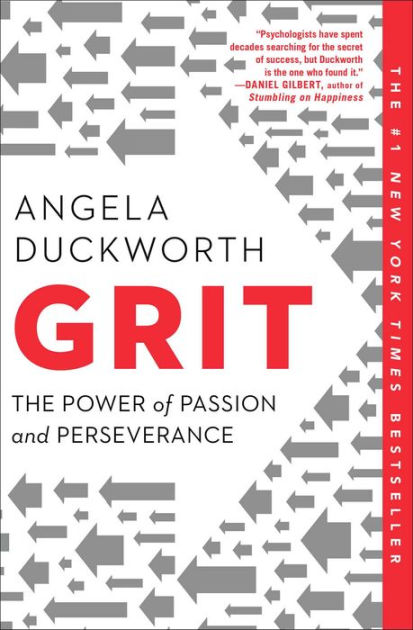
- Resilience and Grit: By allowing for a natural pace, students learn that challenges take time to overcome and that persistence, not frantic effort, leads to genuine accomplishment. The insistence on facing our mistakes and learning from them, rather than fleeing to easier tasks, develops a resilient attitude that will serve them well for life. Ultimately, a slow productivity mindset makes kids gritty, while also giving them adequate recovery time to maintain the long trek of their education.
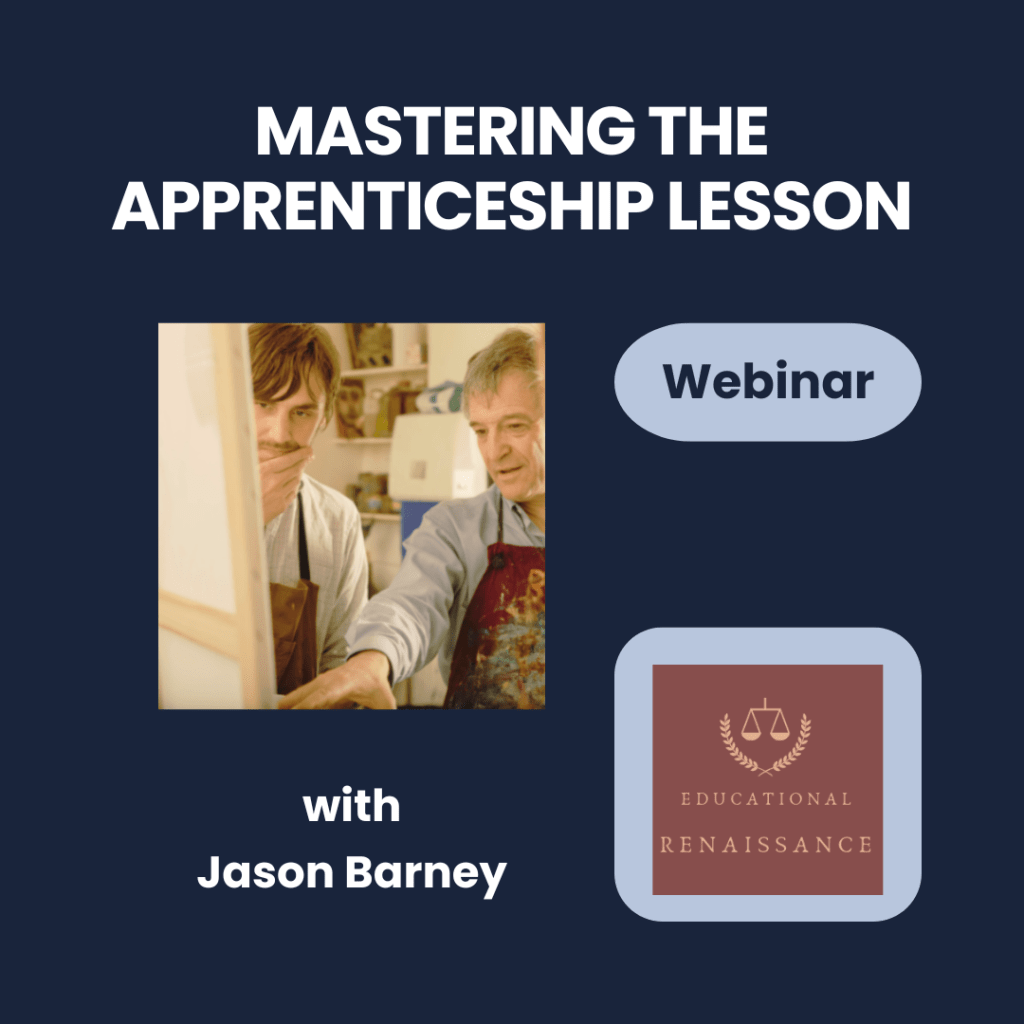
I hope you enjoyed the Slow Productivity in School series. I’m planning a webinar and consulting pathway to follow up on these ideas and help your teachers apply multum non multa, festina lente and the habit of perfect execution or coaching in deep practice in your school.

Leave a Reply