In our series on the soul of education, we’re investigating historical views of the soul that have an impact on both the purpose and the methods of education. Our overarching thesis is that our anthropology will inevitably influence our pedagogy. But when we are unaware of the jumbled mix of assumptions we have about ourselves and about children, drawn inevitably from the trickle down of the Great Conversation, we can unknowingly operate on premises in conflict with our own fundamental worldview.
In this case, we are like the haunted house in Pliny that only the Stoic philosopher Athenagoras can liberate by following the ghost to the courtyard and digging up the bones of an ancient murder. This tactic requires an approach that is both open and critical to the great thinkers of the past who have contributed to the jumble of ideas about the soul in contemporary culture. In the last article we responded mostly positively to Plato’s tripartite view of the soul, though of course we rejected the idea of the soul’s preexistence as inconsistent with a biblical worldview. But there is a dark side to Plato’s understanding of the soul that has cast its long shadow on western tradition.
In the article on the soul in Mortimer Adler’s Syntopicon, that masterful guide to the Great Conversation, the perennial question of the soul is framed around a central dispute: Is the soul a distinct substance that inhabits a body, or is it inextricably bound to the body it enlivens? This is not merely an abstract debate. As educators, our answer determines whether we see our task as training a “ghost in a machine,” or as cultivating an integrated, living person. Plato gave us the classic dualist image of the soul as a prisoner longing for release from its bodily cage. This was a helpful, if limited reaction to the materialistic atomism that preceded him in Greek thought. But it is Plato’s student, Aristotle, who offers a third way—a profoundly unified vision that grounds our entire educational project in the rich soil of embodied reality.
From a Christian perspective, Plato’s view might resonate well with the soul’s ongoing existence after death (a truth that Aristotle is also able to account for), but it falls short in accounting for the resurrection of the body, and therefore in what it means to be human from a biblical perspective.
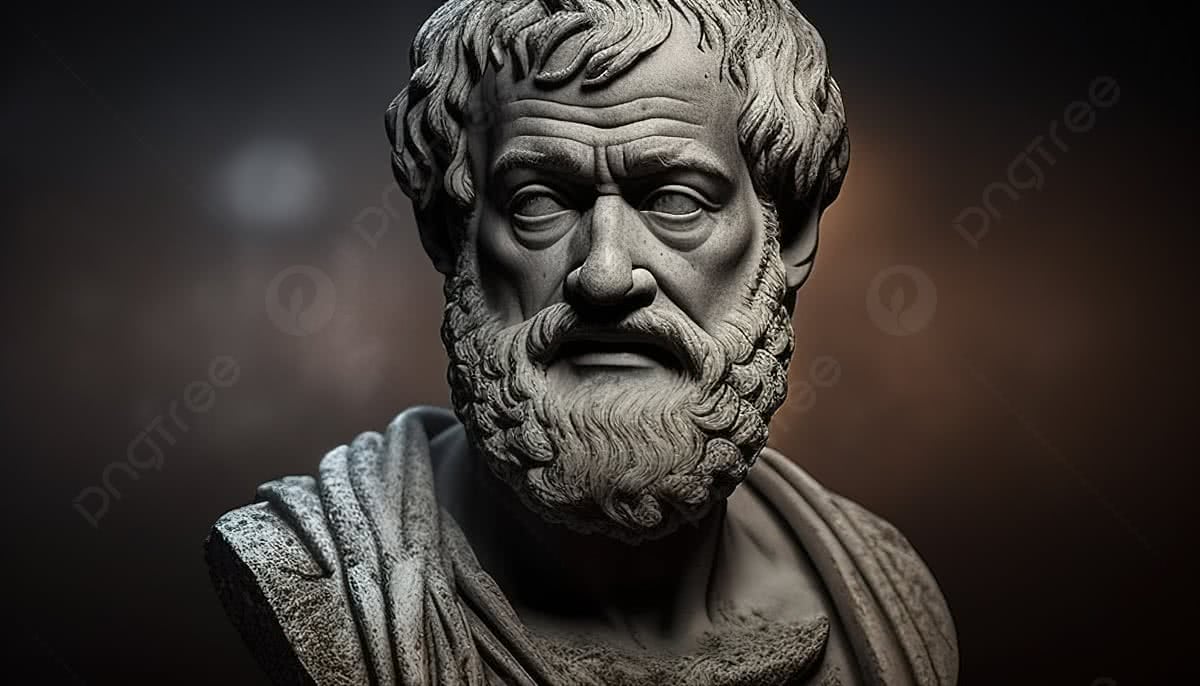
For Aristotle, the soul is not the body’s prisoner but its very principle of life. His psychology (a word originally derived from the Greek for ‘soul’ – psyche), laid out in De Anima, is therefore the necessary foundation for his ethics and thereby his view of proper education. To understand how to cultivate the virtuous mind, we must first understand the living form of the human person. Aristotle’s hylomorphic view of the soul provides the essential framework for understanding and cultivating his five intellectual virtues. In this way, we can shift our pedagogy from the fragmented focus on either mind or body, so common in the modern world, to the integrated formation of the whole person.
A Soul Needs a Body: The Hylomorphic Revolution
Aristotle’s great innovation was to reject both the pure dualism of the Platonists and the crude materialism of the atomists. He charted a middle course known as hylomorphism (from the Greek hyle, “matter,” and morphē, “form”). As scholar Christopher Shields notes, Aristotle saw the soul not as a distinct substance, but as the “principle of organization of a body whose matter has the potentiality for life” (Shields, 2024). In short, the soul is the actuality of a body that has the potential for life. It is the substantial form that makes the matter of a body a living, unified thing.
Aristotle’s own language in De Anima emphasizes this unity with a decisive analogy:
Therefore, we have no need to inquire whether soul and body are one, just as we have no need to inquire whether the wax and its shape are one, nor in general whether the matter of a thing and that of which it is the matter are one. (De Anima, Bk. II, Pt. 1)
This hylomorphic vision is revolutionary for educators. It means we teach embodied souls. The physical world of the classroom—the beauty of the art on the walls, the order of the desks, the posture of the students—is not incidental to learning. It is part of the architecture of the soul’s formation. Because all knowledge begins with the senses, the body is not a distraction from the life of the mind but rather its gateway to the world.
The Ladder of Life: Aristotle’s Ascent and the Imago Dei
Once Aristotle establishes that the soul is the form of the body, he spends the rest of De Anima investigating what this form looks like across the vast spectrum of living things. His method is empirical and observational; he builds his argument from the ground up, starting with the simplest forms of life and ascending to the most complex. This “ladder of life” not only provides a brilliant taxonomy of the natural world but also offers a profound parallel to the biblical account of creation and the nature of man. In a way that mirrors the progression of the days of creation in Genesis, Aristotle’s argument ascends through three fundamental levels of soul, or life-principle.
First, he observes the nutritive soul, the power shared by all living things, from the humblest plant to man. Its functions are the most basic: nutrition, growth, and reproduction. This is the soul in its most foundational sense, the biological urge to sustain oneself and to generate new life. This resonates powerfully with God’s first commands to his creatures in Genesis 1. To the plants, the sea creatures, and to mankind, the imperative is the same: “Be fruitful and multiply” (Gen. 1:22, 28). For both Aristotle and the biblical authors, life’s primary and most universal impulse is a good and ordained principle of flourishing. It affirms the goodness of our createdness and our participation in the fundamental rhythms of the cosmos.
Next, Aristotle identifies the sensitive soul, which belongs to animals and, by extension, to humans. This faculty adds to the nutritive powers a new set of capacities: sensation, appetite (desire and aversion), pleasure and pain, and locomotion. This is the realm of the passions and corresponds to the lowest part of the soul in Plato’s tripartite conception. Here we see the raw material for what the Apostle Paul calls the “flesh”—the seat of desires which, since the Fall, are disordered and at war with the spirit (Gal. 5:17). Yet these passions are not inherently evil; they are God-given capacities for experiencing and navigating the world. The capacity to feel pleasure is a gift that allows us to enjoy God’s creation; the capacity for anger can be a righteous passion against injustice. The Christian life is not about the Stoic eradication of these passions, but their right ordering. As educators, our work in habituation and character formation is largely the work of disciplining and directing this sensitive soul, training our students’ loves so that their desires are aligned with the good.
Finally, at the pinnacle of the earthly ladder, Aristotle arrives at the rational soul, which is unique to human beings and immortal in its essence (see De Anima, Bk. 3, Pt. 5). This is the power to think, to reason, to use language, and to grasp universal truths. It is here that Aristotle’s philosophy most profoundly intersects with the biblical doctrine of the Imago Dei. “Then God said, ‘Let us make man in our image, after our likeness. And let them have dominion…’” (Gen. 1:26). While the Imago Dei is a rich and complex concept, it has always been understood to include this unique human capacity for reason, moral deliberation, and relationship with God. Our ability to abstract the form from the matter, to contemplate the eternal, and to order our lives according to a known good is the echo of our Creator’s rational nature. The ultimate goal of a Christian education is the redemption and sanctification of this power—what Paul calls being “transformed by the renewal of your mind” (Rom. 12:2)—so that our reason is no longer a tool for self-service but an instrument for knowing, loving, and serving God.
This ascent from the nutritive to the sensitive to the rational provides the essential psychological map for our work. We are tending to whole persons, honoring their physical needs, training their passions, and ultimately, guiding their reason toward its proper end. It is the perfection of this rational soul, working in concert with the lower powers, that Aristotle identifies as virtue.
The Soul’s Toolkit: Forging the Intellectual Virtues
In the Great Conversation, a key question about the soul concerns its powers or faculties. Aristotle provides a brilliant taxonomy, showing how the soul’s capacities build upon one another, from the basic nutritive powers we share with plants to the sensitive powers we share with animals, culminating in the rational power unique to humans. It is within the rational soul that the intellectual virtues reside. Aristotle subdivides our reason into two functions: the calculative part, which deliberates about contingent reality (what can be otherwise), and the scientific part, which contemplates necessary reality (what cannot be otherwise). Our task is to bring both to their peak form.
The Virtues of Making and Doing: Technê and Phronēsis
The calculative part of the soul works on the world of action and production, using the data provided by our senses. The two virtues that perfect it are technê and phronēsis.
- Technê (Artistry/Craftsmanship): As we explored in the “Apprenticeship in the Arts” series, technê is the excellence of making, “involving a true course of reasoning” (NE 1140a). It is the virtue of the artisan who can see the form of a chair in a block of wood and guide his tools to bring it into being. When we teach students the technê of grammar, rhetoric, or even long division, we are doing more than transferring skills; we are habituating their souls to reason productively, bringing order and form to matter.
- Phronēsis (Prudence/Practical Wisdom): While technê produces a good product, phronēsis produces good action. This is the master virtue discussed in “Counsels of the Wise,” the “reasoned state of capacity to act with regard to the things that are good or bad for man” (NE 1140b). Phronēsis cannot be learned by abstract rule-following. It requires experience—a deep reservoir of memories built from sensory engagement with the world—to perceive the particulars of a moral situation and deliberate well regarding what is best. We cultivate this by immersing students in history, literature, and scripture, training them to see the world with moral clarity.
The Virtues of Knowing and Contemplating: Epistēmē, Nous, and Sophia
Beyond the changing world of action lies the unchanging world of truth, the domain of the scientific part of the soul. Aristotle argues this highest human faculty, the intellect (nous), is unique among the soul’s powers, describing it as something divine and immortal.
This intellect is separable, impassible, unmixed… and when separated from the body it is that only which it is, and this alone is immortal and eternal… and without this nothing thinks. (De Anima, Bk. III, Pt. 5)
This power of the intellect is what allows us to move from seeing particular examples to grasping universal truths. The virtues that perfect this power are epistēmē, nous, and sophia.
- Epistēmē (Scientific Knowledge): This is knowledge of necessary truths through logical demonstration (NE 1139b). It is the virtue at work in a Euclidean proof or a scientific syllogism.
- Nous (Intuitive Intellect): This is the direct, intuitive grasp of the first principles from which demonstrations begin (NE 1141a). It is the moment of insight, the “seeing” of a self-evident truth that cannot be proven but only understood.
- Sophia (Wisdom): Sophia is the pinnacle of intellectual virtue, the union of nous and epistēmē (NE 1141a). It is the comprehensive understanding of the highest truths, seeing both the foundational principles and the logical conclusions that flow from them. This is the ultimate aim of a classical education: to equip students for the contemplation of ultimate reality.
The Aristotelian Classroom
Aristotle’s answer to the great question of the soul provides us with a fully integrated model for education. Our work is the patient cultivation of the living form, moving students up the ladder of their own God-given capacities.
An Aristotelian classroom begins with rich sensory experience, recognizing the body as the foundation of learning. It proceeds through disciplined apprenticeship to form the virtues of making (technê) and acting (phronēsis). Finally, it guides the student in the joyful work of demonstration (epistēmē) and the profound act of contemplation (nous), all in the service of wisdom (sophia), which finds its ultimate fulfillment in the knowledge and love of God.
References
Adler, Mortimer J. “Chapter 85: Soul.” The Great Books of the Western World, vol. 3: The Great Ideas II. Encyclopedia Britannica, Inc., 1952.
Aristotle. De Anima. Translated by J.A. Smith. The Internet Classics Archive. Accessed August 26, 2025. https://classics.mit.edu/Aristotle/soul.mb.txt.
Shields, Christopher. “Aristotle’s Psychology.” The Stanford Encyclopedia of Philosophy (Summer 2024 Edition), edited by Edward N. Zalta & Uri Nodelman, https://plato.stanford.edu/archives/sum2024/entries/aristotle-psychology/.
Leave a Reply